The price reflects the complete, finished system, engineered and assembled as one unit.
Secure steel core
Custom milled cladding
Armored frame
Multi-point locking
Hinges and hardware
Insulation and thermal seal
Factory assembled and tested
Shipped with frame and trim
How ordering works
Custom shop drawings start after a 25% non-refundable deposit. They usually come back within a few days to a week, and how long you take to approve them is up to you.
“The door looks incredible, and on the outside looks like a normal French Door, but is packed with so many security and safety elements that it really is a work of art. Highly recommend!”
Penny M.
“As a contractor that installs things like this, these are by far the most well made, easy to install doors. Super great customer service as well!”
Kastin N.
“The sign of a good company is not when everything goes right, but how they react when something goes wrong. … We talked to many vendors, and Fortified Estate was far more knowledgeable and aware of what we were trying to build than any of the others.”
Nathan B.
“The products are not only top-tier in security but also beautifully designed … perfect for luxury homes where aesthetics matter just as much as protection.”
Dee M.
“Fortified Estate did a fantastic job working with us developing a design for the door and the custom color painted on the door and frame.”
C. D.
“We wanted style, safety and security! We got all 3 WITH excellent care and service every step in the process.”
Rosalyn B.
1 / 6
Design options
Exquisite Safe Room Door Designs
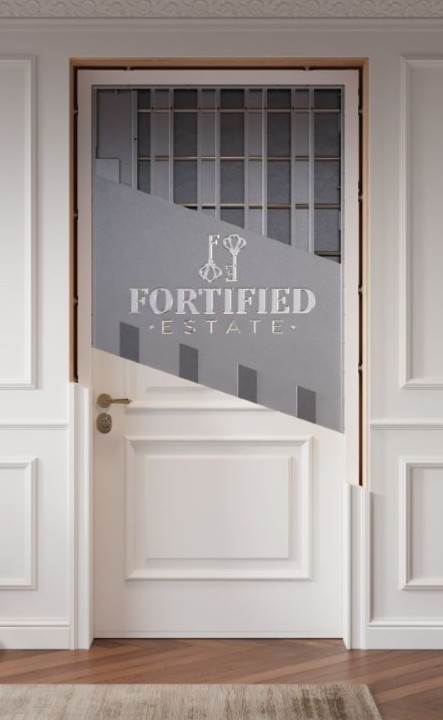
Milled to match the hallway doors, because being undetected amplifies a safe room’s security. Each door is finished by specialist fabricators in Europe, and the secure core discreetly carries the security features inside the leaf.
Stained Wood Panel
We clad panic room doors to match the house’s surrounding doors’ intricate millings, allowing for a discreet appearance.
Painted Finish Panel
Painted finishes match to several hundred RAL colors.
Fully Custom Design
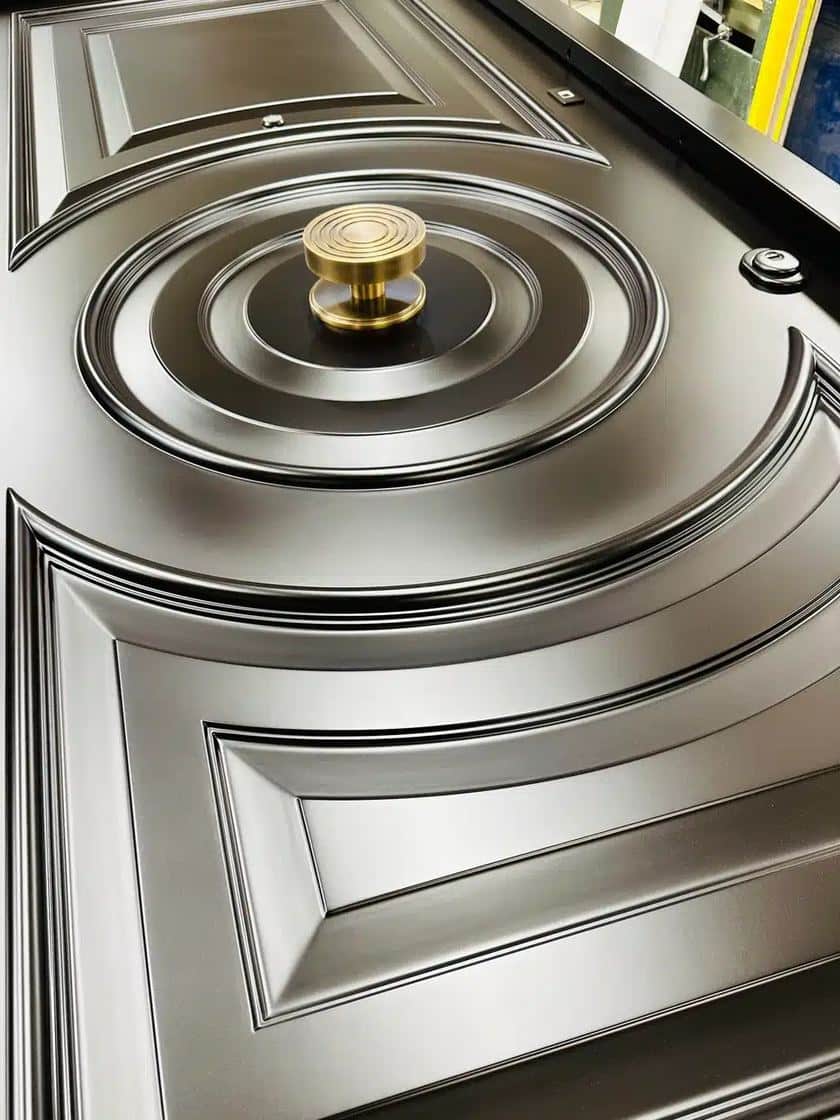
Some clients want a one-of-a-kind door. Our custom safe doors are milled to your drawing, with intricate millwork and high-sheen finishes.
1 / 3
Gallery Safe room door ideas, from doors already in place.
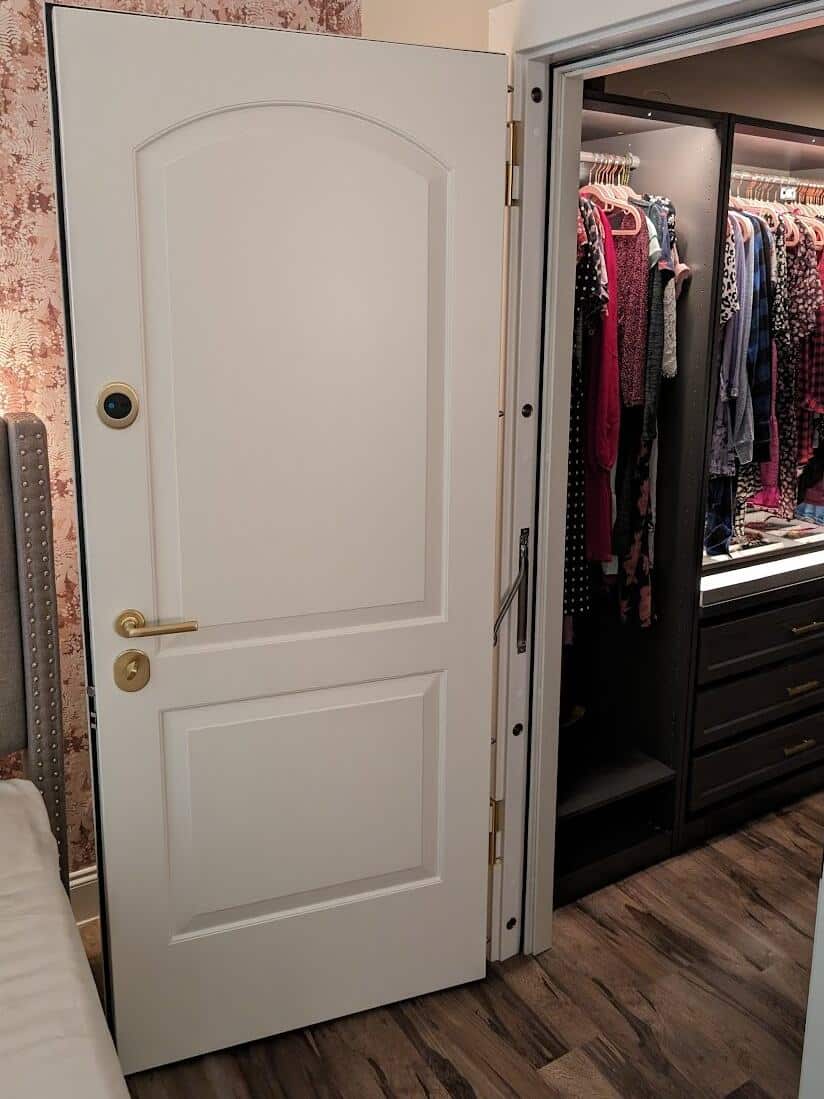
A classic arched-panel safe room door with brass hardware, opening into a walk-in closet.
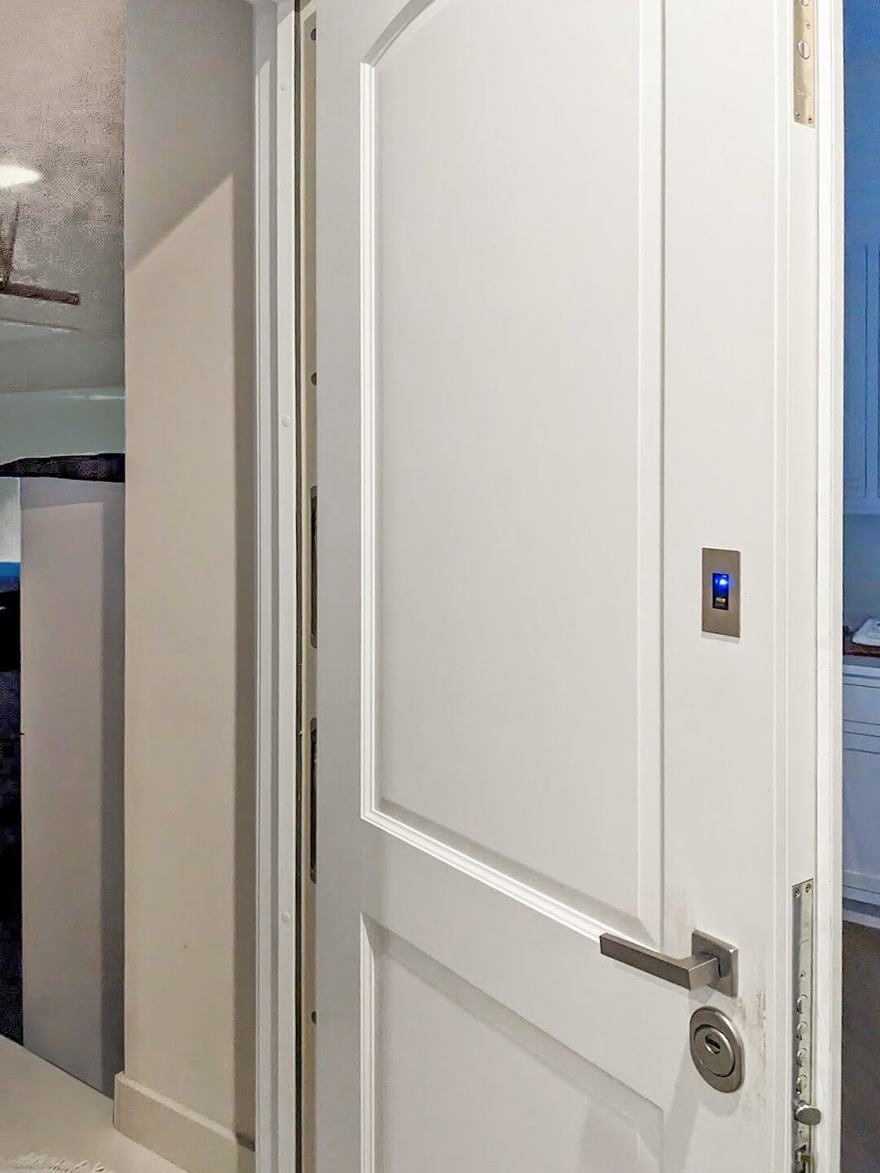
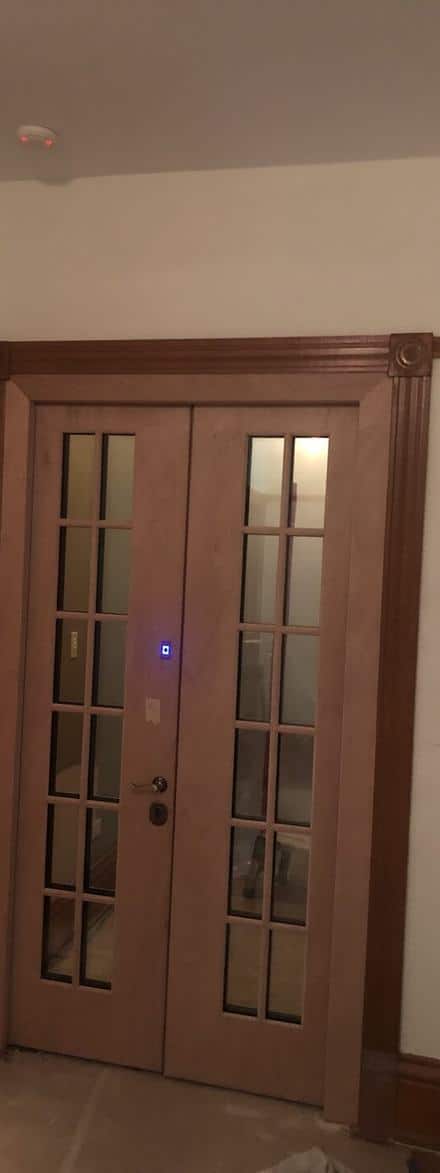
Fingerprint entry built into a traditional paneled door.
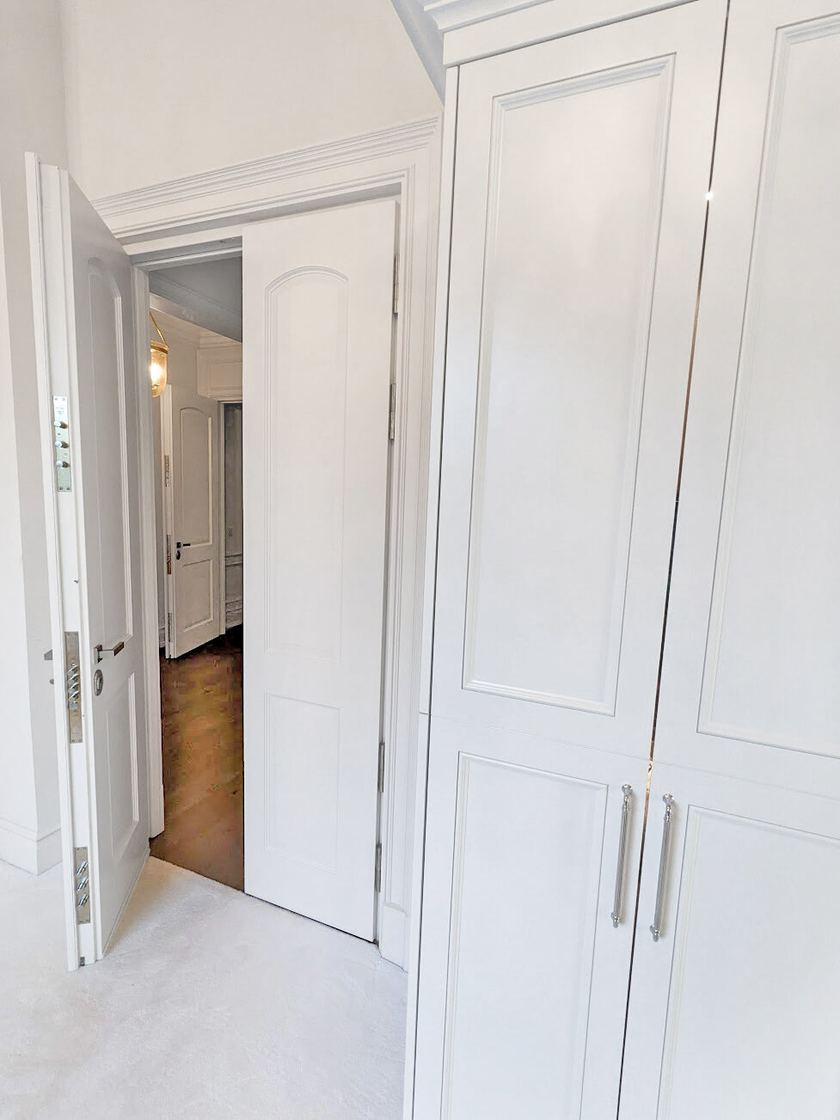
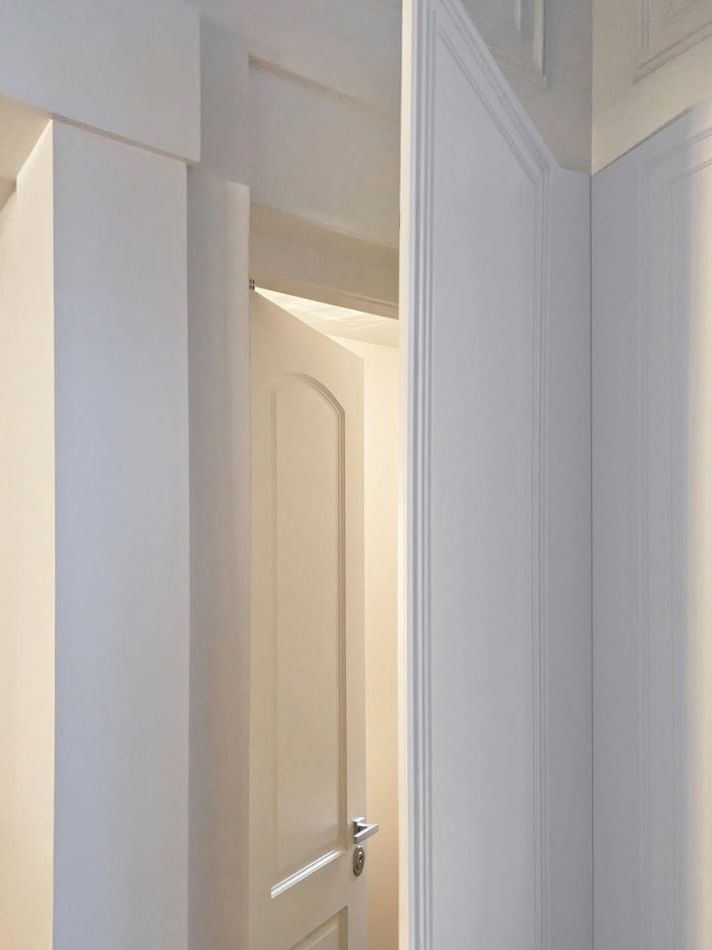
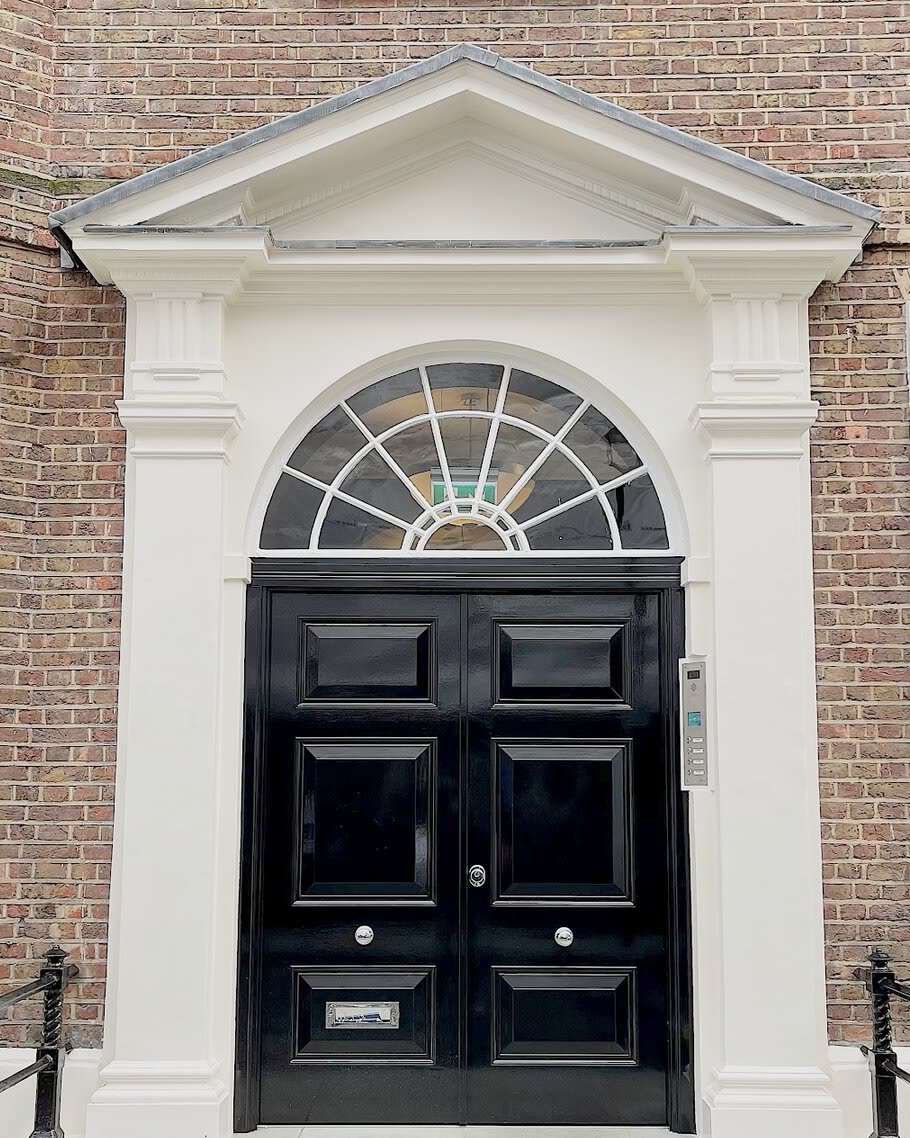
A safe room door milled to sit flush with paneled walls.
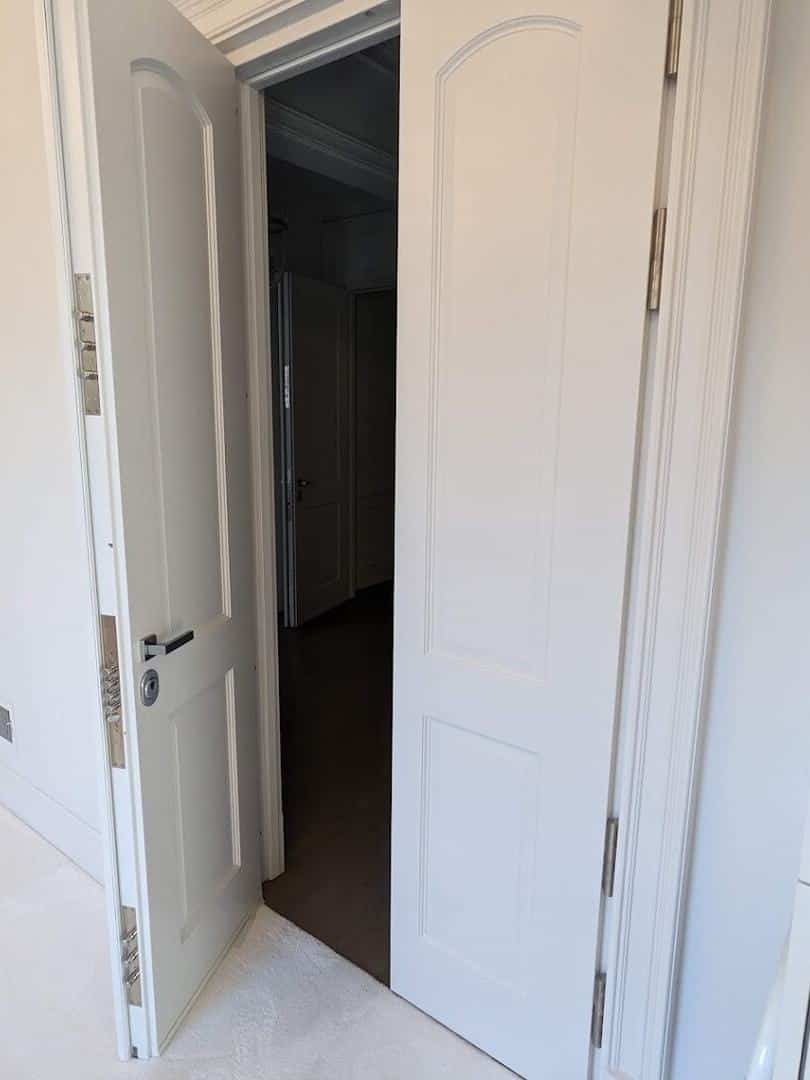
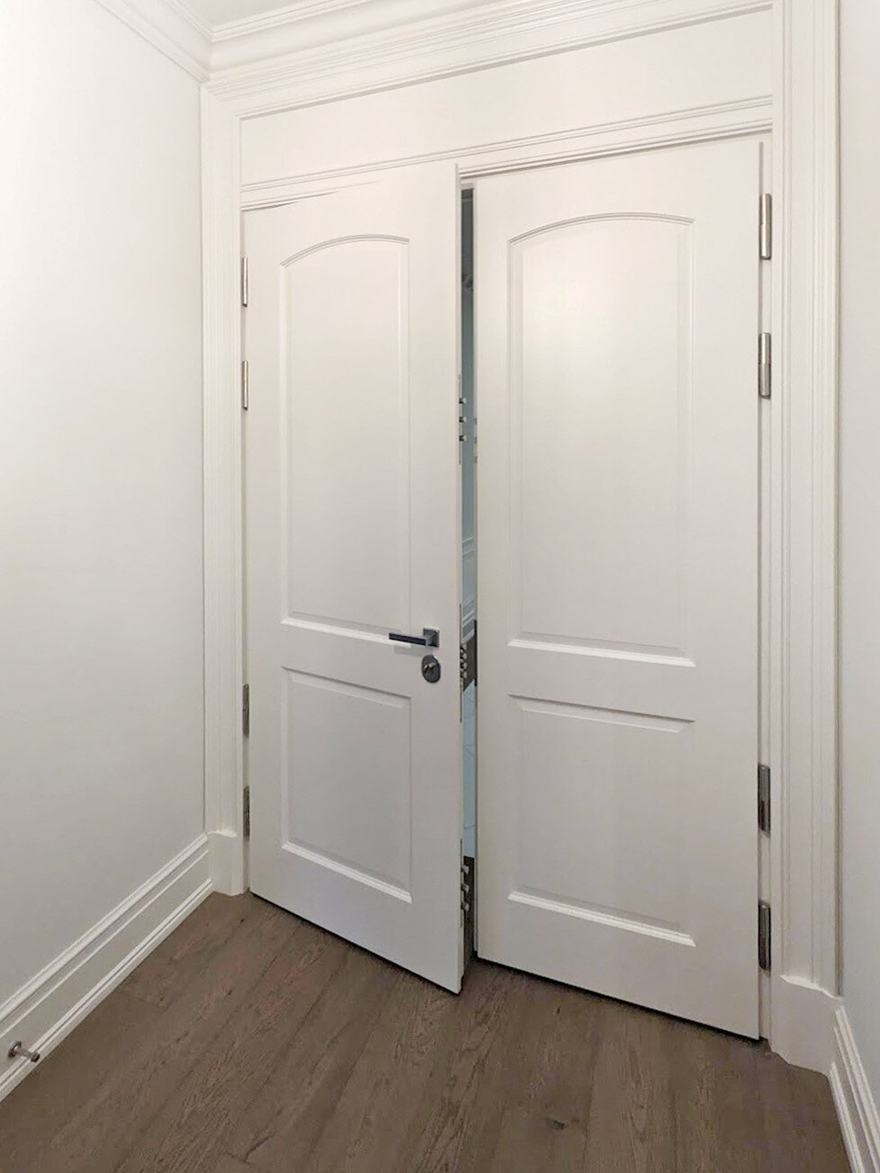
A paneled double safe room door, its steel bolts set into the leaf edge.
A double safe room door milled to match the house’s interior doors.
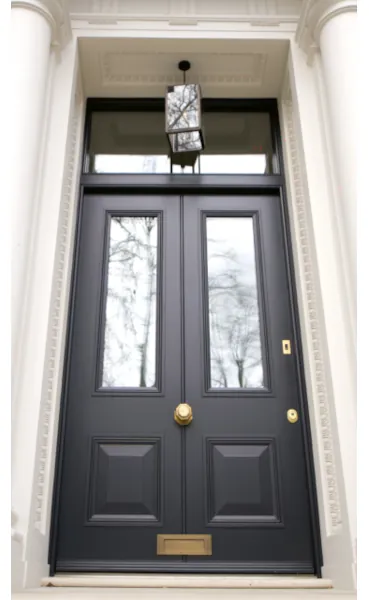
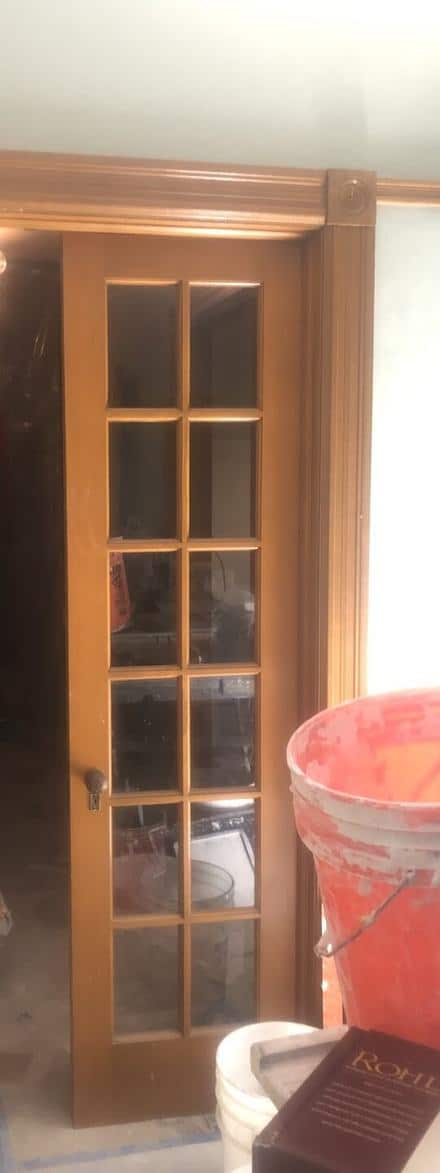
BeforeAfterThe same French-door opening during the renovation, then with the armored glazed pair fitted.
Ballistic glass, sidelights and transoms are engineered into the assembly where a project needs them. Doors with glass run a little longer, around 14 to 15 weeks.
Our base model doors are tested to US Department of State SD-STD-01.01 Rev H assault standards, a common specification for US Embassies. For ballistics, the steel used is tested to the European FB4 and FB6 standards and specified by protection level.
Forced-entry attack test, conducted to US Department of State standard SD-STD-01.01 Rev H.
Bullet Resistance
All of our safe room doors can be upgraded beyond the base forced entry resistant level to discreetly include ballistic steel. Welded into the door leaf and frame, the door system can stop multiple rounds, specified from higher power handguns up to military rifles.
Level 3 Ballistic Upgrade
High-powered handguns, such as .44 magnum
FB4 EU / UL3 US Equiv.
Level 8 Ballistic Upgrade
Military Assault Rifles, Such As 7.62 Rounds
FB6 EU / UL8 US Equiv. 7.62 x 51 military rifles such as AK-47, M-14, and AR-15.
How the steel is specified
Ballistic steel runs inside the door itself rather than sitting in a panel bolted to one face. The assembled door has not been through a UL 752 test of its own, so we describe it by the level it is built to rather than by a label it does not carry, and because the assembly carries more steel than the rated sheet alone, it goes beyond that single-sheet specification.
Forced Entry Resistance
FE means forced entry: how long the door holds against a team of attackers working on it at once.
FE-5 | U.S. Dept. of State Standard
Equates to 30 minutes of an expert attacking
30+ man-minutes Six attackers, three 5-minute intervals per door.
FE-15 | U.S. Dept. of State Standard
Equates to 4+ hours of an expert attacking
4+ man-hours Six attackers, three 15-minute intervals per door.
What the test involves
Six experts attack the door at the same time with sledgehammers, carpenter hammers, wood-splitting mauls, axes, four- to five-foot crowbars, chisels, torches and a 120 lb battering ram that takes two men to swing. Having six of them on it at once is a large part of the difficulty. FE-5 and FE-15 differ in how long that goes on for.
Elegant wood craftsmanship outside and, inside, a multiple-layer construction with 16 to 20 locking bolts on all four sides. Each panic room steel door is custom, so it suits your home’s style while it protects the people in the room.
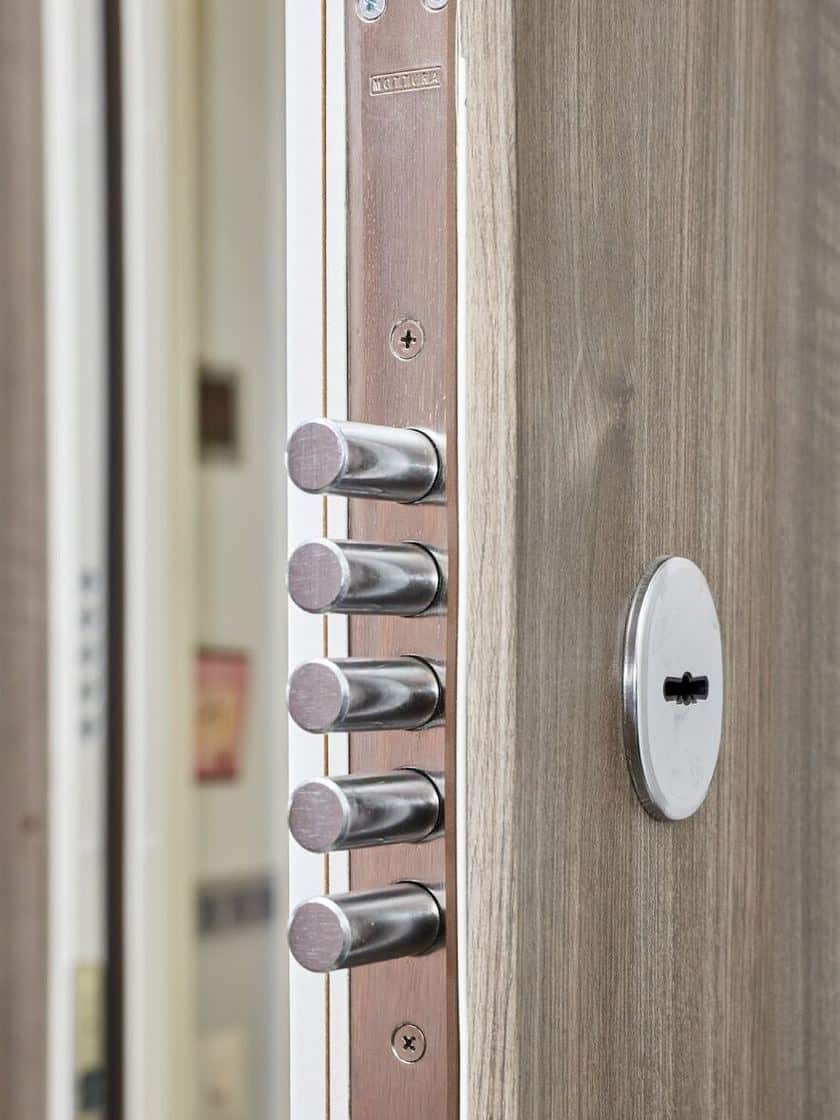
Lock animation: bolts on every edge of the leaf, then the closed door in its wall.
System Includes:
All-side locking
Bolts on all four sides of the door, 16 to 20 in total.
12 active steel bolts
Hardened steel, on the strike side, top and bottom of the door.
4-8 passive steel bolts
On the hinge side, so the door cannot be lifted out.
Fail-secure locking + relocker
Drill-resistant core. Manganese steel over the mechanism, plus a relocker.
Single-action to engage all bolts
One thumbturn throws every bolt at once. Or set it to auto-lock on close.
Additional locking system details
Locking system options. Several lock options are available for our safe room doors, and each is factory assembled and tested with the door. Locking and unlocking is by a single thumbturn, a single key turn, a key code or a fingerprint scan.
You may upgrade your safe room door to single-handed egress. It locks by lifting the handle on either side, and from inside the panic room, pushing the handle down draws the bolts back for exit.
Motorized and keyless options. A motorized upgrade drives all the active bolts. With it, a digital keypad or a biometric fingerprint scanner can be built into the door leaf, so getting into the panic room needs no key.
Locking considerations for panic rooms. When planning your panic room, think first about getting inside promptly and safely. Where possible, we recommend keeping the panic room door normally unlocked, so your family can get in immediately. Where the door will be normally locked, such as a room that doubles as a secure home vault, access that needs no key or second device is ideal, which is where a keypad or biometric scanner in the leaf comes in. The human is the key, with no need to search for one.
Which biometric door lock works best depends on who needs to get in and how fast. Once inside, the panic room door lock has to deploy quickly, because there is little time to reach the room and lock it down. Consider where the safe room locks sit on the door, and the heights and abilities of the people in your home, when you choose the safe room door hardware. Make sure every locking mechanism is within easy reach and easy to understand. Don’t assume people will know what to do in an emergency. We recommend training your family to:
Learn the quickest path to the panic room from common areas
Understand how to engage the panic room door lock properly
Understand how to disengage the lock safely and at the appropriate time
You want it to become second nature, so everyone can respond quickly in a real emergency.
Access and automation
Safe Room Door Automations
Automatic Locking
Set the door to auto-lock on close, and all 12 active bolts throw when the door closes. A simple button press on the safe side can fully unlock the door, and there’s always a backup mechanical thumbturn as well.
Biometric Scanning
Biometric access allows for convenient entry and auto-locking exit. With the motorized upgrade, a fingerprint scanner can be built into the door leaf, so entry needs no key.
Concealed Door Closer / Opener
A concealed closer keeps the door discreet, in line with the rest of your panic room design.
Not sure which build fits your safe room?
Tell us the opening and the threat you’re planning for, and we’ll walk you through which build fits best and why. A photo of the doorway is enough to start.
Your custom safe room door design Blends into the rest of your home.
Hinges a child or an elderly adult can open Designed and tested for residential use.
Keypad or fingerprint entry With the motorized upgrade.
Steel bolts set into the leaf edge of a paneled double door.
Safe Room Door Security Features Include:
Multiple-layer construction inside the leaf.
An armored frame, engineered and assembled with the leaf as one unit.
Two inches of Rockwool in the core, for panic room sound insulation.
A frame anchored into the surrounding wall.
The door is configurable to swing out of or into the panic room.
Ballistic steel is optionally hidden inside the safe room door, stopping multiple handgun and rifle rounds.
Reference
More Security Information
Risks To Consider
According to the FBI, millions of property crimes, such as burglaries and home invasions, are committed each year. Many of them happen when nobody is home. Some happen while people are at home. A panic room (or safe room), a place to retreat to in a crisis, gives you and your family somewhere to go.
Within the room, the panic room door is the most critical feature. When you plan one, it helps to understand the attacks the room may have to deal with, so you can be sure you are choosing and installing the right panic room security door.
Types of Attacks
People will go to great lengths once they intend to get into a safe room, and they may bring a wide range of tools to do it. The door needs to hold against what is likely to be used on it. Those attacks come in two broad kinds, and each calls for a different kind of protection.
Firearms
Criminals have easy access to handguns and rifles of many sizes and calibers. They use them to intimidate and to harm, and sometimes to try to get past a door or a lock. Rifles are much more powerful because of the velocity of their rounds, but they are generally limited to high-profile, premeditated situations. Handguns are far more often the firearm of choice.
A bullet is a single linear piercing force, and the right material, in our case hardened ballistic steel, will stop it from penetrating the door and hurting someone in the room behind. A safe room exists for the moment someone is already inside and armed. For panic room applications, our clients typically upgrade their safe room door with ballistic steel. Ballistics is chosen by who will be in the room and the criminal firearm threats in the area.
Forced Entry
A human attacker brings a far wider range of tools and angles, depending on their level of sophistication: axes, breaching rams, power tools. And unlike a bullet, a human can adapt mid-attack, identify weaknesses, and concentrate effort there. That is what forced-entry resistance is for.
A firearm is one option for a home invader, but common destructive tools are more likely. One of the most common ways to force a door is a crowbar: an ordinary door can be pried out of its frame, or its deadbolt knocked out of line, with a little leverage, and a crowbar is on the shelf at any hardware store. Others try to batter a door down with a ram, hack at it with a fire axe or swing a sledgehammer, and some use quieter methods such as lock bumping or picking.
Our panic room doors lock with 12 active bolts and 4 to 8 passive bolts, on all four sides of the leaf.
The forced-entry test is built around tools like these, with six experts working on the door at once.
True Security
A proper panic room door is built to protect the people inside it, quickly and consistently. Doors like ours, engineered from the ground up to exceed embassy-grade assaults, are specially formed to repel attack from wide-ranging angles, powerful tools, and experienced criminals. They are tested to FE-5 or FE-15, US Department of State SD-STD-01.01 Rev H.
Every door in the range starts from the same steel core, the same multiple-layer construction, the same hardware options and the same milled finishes, so the protection is consistent, and so is the way the door sits in a house. The craftsmanship is there to blend into your home.
FAQ
FREQUENTLY ASKED QUESTIONS
How Is A Safe Room Door Installed?
Our residential safe room doors are custom-designed to fit a home, and built to be installed by your own contractor. Clients throughout North America have them fitted into the wood-studded or masonry walls of a panic room, with the frame anchored into the surrounding wall. (Many clients also install ballistic panels to armor their safe room walls.)
The main difference between installing a panic room door and a standard interior door is the weight. For a door of roughly 3 by 7 feet, an FE-5 runs about 250 to 300 lb and an FE-15 about 300 to 350 lb. Ballistics add more: an FE-5 at Level 3 is about 300 to 400 lb, and an FE-15 at Level 8 about 450 to 550 lb. What decides whether it feels normal is the engineering rather than the mass: the hinges are designed so that a child or an elderly adult can open the leaf easily, and they are designed and tested for residential use.
Our residential safe room doors also have features that make installation easier and offer flexibility on site. The assembly includes 3D adjustable barrel hinges, an adjustable strike plate, a removable bottom bolt with an in-floor sleeve, removable door cladding, and more.
The door system arrives as the complete, finished system, engineered and assembled as one unit, then shipped with its frame, and it is assembled and tested before shipping. Your contractor measures the rough opening and installs the door level and plumb, working from the custom shop drawings.
Example shop drawings of a panic room door.
How Long Does Manufacture Take?
Our panic room doors are made to order, and each home safe room door goes through several custom steps, from engineering to welding to bespoke milling.
Shop drawings usually come back within a few days to a week, and how long you take to approve them is up to you. From approval, most doors currently run 12 to 14 weeks. Pocket doors and doors with glass run a little longer, around 14 to 15 weeks. The doors are finished by specialist fabricators in Europe, and freight is included in those figures. Expediting is sometimes possible.
How Much Does A Panic Room Door Cost?
Panic room doors run from $12,000 to $25,000+. Price moves mainly on the security level specified (most projects specify both forced-entry and ballistic protection, at different levels), the size of the opening, and how elaborate the millwork and finish are. Large or double doors may exceed this.
The price covers the complete door system: a secure steel core, custom milled cladding, an armored frame, multi-point locking, hinges and hardware, insulation and a thermal seal, factory assembly and testing, and shipping with frame and trim.
Can I Just Place A Ballistic Panel On A Normal Door?
It is not recommended. Converting a standard door raises three kinds of problem:
Design. For many homeowners, an obvious panel covering one side of the door is a deal breaker.
Function. A standard door is not built to carry the weight of ballistic material, so it sags and starts binding. The extra weight makes the door hard to swing, and before long it may not close into place, or may not open once closed. Both are serious problems in an emergency.
Security. Bolting armor onto an existing leaf leaves the frame, hinges and lock untouched, and those are what get attacked first. The door is no harder to pry open, or to defeat at the lock, than it was without the panel.
Our base model doors are tested to US Department of State SD-STD-01.01 Rev H assault standards, at FE-5 or FE-15.
What Else Should I Consider For My Safe Room Entrance?
A safe room usually serves a day-to-day purpose as well, such as a bedroom or a closet. So the door is usually an interior safe room door that the home opens every day, and a few features are worth considering for its entrance.
We recommend having a way to see what is going on outside the door. Visibility tells you when the coast is clear and when to call the police. A camera system is a discreet way to do it: a camera pointed at the panic room entrance, or cameras throughout the home, with the video shown inside the panic room or on your phone or tablet.
Some builders put paneling or shelving in front of a safe room door, though it rarely suits a room used every day. Most clients rely on milling that matches the nearby interior doors instead, because being undetected amplifies a safe room’s security.
Depending on your threat profile, an overpressure system may be a worthwhile installation for the panic room. Positive pressure limits contaminants, biohazardous particles and smoke coming into the room through small gaps around the door system.
Can A Safe Room Door Go Into A Concrete Or Block Wall?
Block walls, yes: block is masonry, and our panic room doors go into masonry or wood-studded walls, with the frame anchored into the surrounding wall. For poured concrete, send a photo of the opening and we will confirm how the frame is fixed.
It usually comes down to what the room is for. Panic room doors are built to protect people, vault room doors are for home vaults and collections, and gun room doors are for walk-in gun rooms. If one room has to do both jobs, such as a safe room that doubles as a secure home vault, send us a photo and we will set out what each option would mean there.
Who Installs The Door?
Your own contractor installs the door, measuring the rough opening and setting the door level and plumb, working from the custom shop drawings.
Forced entry is a time calculation; ballistics is a human risk calculation. Forced entry levels are chosen by how long you need protection to hold: what is in the room, how quickly a threat is detected, how long the police response takes. FE-15 is specified where response times are long enough that holding a door for an extra 30 minutes changes the outcome. Ballistics is chosen by who will be in the room and the criminal firearm threats in the area.
This page covers panic room doors, built for safe rooms and panic rooms. The other six are built for different openings, at different prices and protection levels. The hub sets all seven side by side, with prices, both rating scales and lead times, so you can see which one fits your situation.
“Everything from specifying and recommending all the customization options, to technical help during installation, they were so gracious and helpful.”
Penny M.
“Their customer service is among the best I have ever experienced. The team was patient, attentive, and guided me through every step of the process.”
Brittany G.
“Fortified Estate did a fantastic job educating our team to ensure we could answer every question and address every concern our clients had.”
Nathan B.
“Their team was professional, responsive, and easy to coordinate with. Everything arrived on time and exactly as promised.”
Dee M.
“The Fortified Estate website was very helpful with clear, detailed and specific information regarding levels of protection from a variety of weapons … even for a novice like me. Decision making was easy.”
Doug H.
“Every step of the way was smooth … they delivered everything they said they would on time and within our budget.”
C. D.
“These guys are simply the best. And they genuinely care about customer satisfaction above all else.”
G. J.
“… this company is 10/10 for customer service, pricing, time to deliver, and everything in between!!”
Caleb
“So thankful for this company and so pleased with the beautiful results!”
Send a photo of the doorway and tell us what the room needs to do. No tape measure needed. We will come back with the door types that fit your goals and a preliminary starting price range.
Who you will hear from
Lauren KuopusOperations specialist
Michael MendozaTechnical associate
Eva MichelleClient concierge
Jon HarrisChief security officer
Estimate door price
The quickest way to a preliminary starting price range for your opening.



 Contact
 October 2026
 February 2025
 December 2024
 December 2024
 May 2024
 April 2024
 September 2019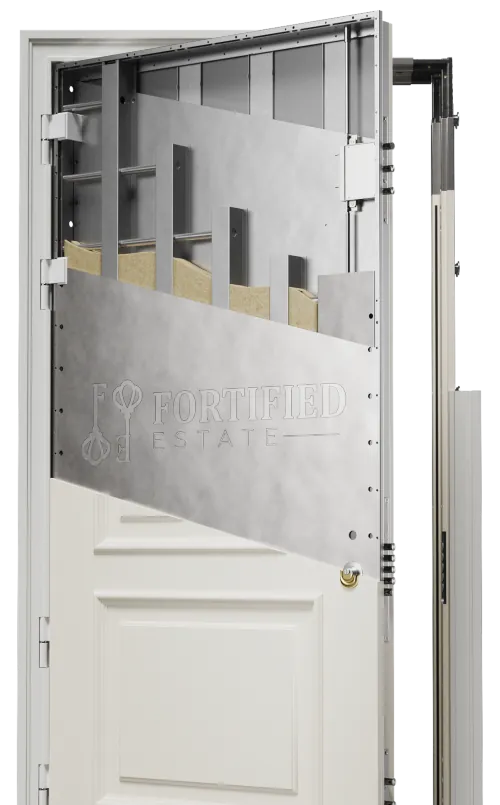




 Lauren KuopusOperations specialist